Case studyAgentic Transformation
Agentic transformation for an established events business.
Ongoing · 2025
A seed-stage housing company hit the ceiling of no-code. We replanted the whole build onto production-grade, scalable technology, in a matter of days.
Roost went after a real problem in affordable housing. The processes around it are notoriously bad, and they land hardest on the people who can least afford the friction: vulnerable populations trying to find a place to live.
They raised a seed round on the strength of an initial prototype: a working product built on a Lovable platform, with integrations they were able to vibe-build and vibe-code. It was enough to start getting real business through the door. Then came the need every funded startup meets: to turn that prototype into something that can actually run the company.
The prototype had reached the edge of what its tools could do. Roost already had something complex in shape: a marketing site, internal products, and portals for both admins and end users. Basically the whole flow.
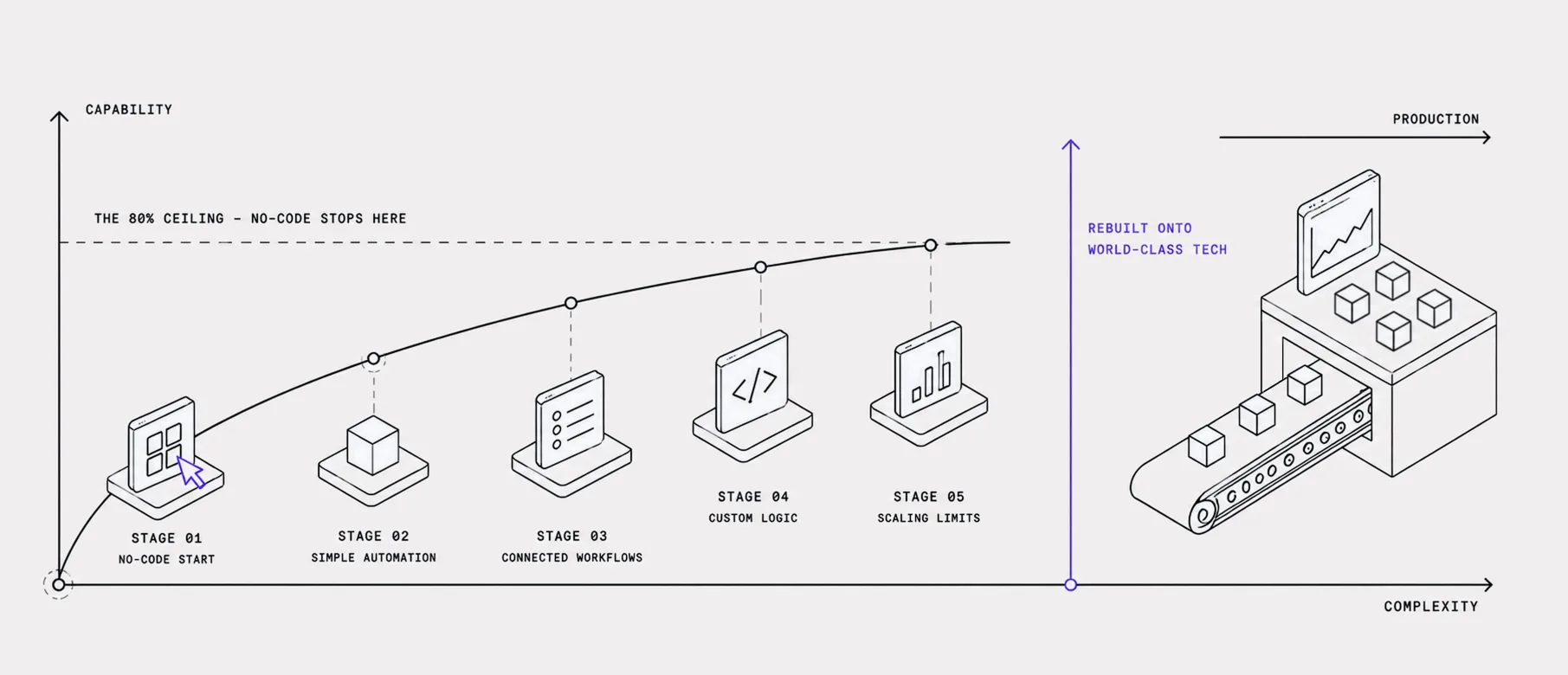
But it was held together by Lovable and Airtable, and it was hitting their limits.
“These tools are great for the Pareto rule, 80/20. You get to 80%. But once you start doing very complex things, it requires a ton of work and hacking around it. That is when you need a world-class technology product that is scalable, with the right architecture.”
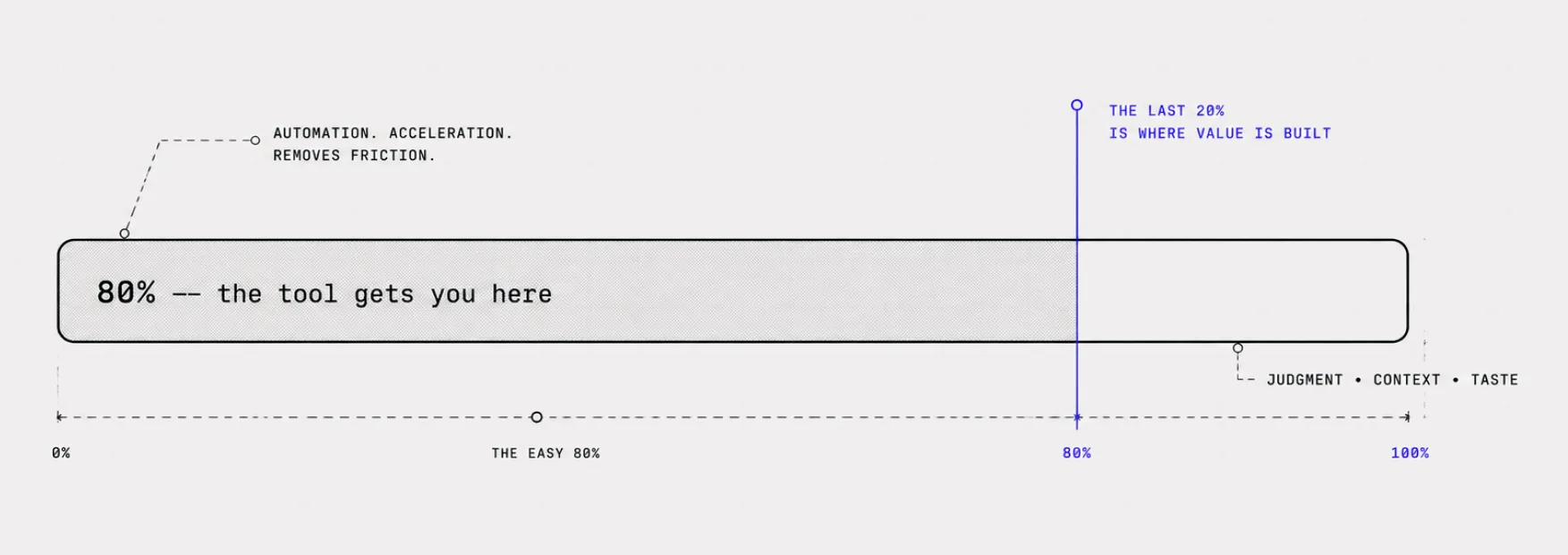
Historically, closing that gap was reserved for big, venture-scale bets, because that was the only way to justify the team, the time, and the resources it used to take.
What changed wasn't willpower. It was cost. AI, in the hands of people who are genuinely good at their craft and at directing it, collapsed a venture-scale project into days.
“Thanks to AI, we were able to take everything that they had built and replant that into world-class scalable technologies. In a couple of days.”
The thing that used to be reserved for big bets (the right architecture, built to scale) became something a strong, focused team could do in days. That removes the old tradeoff, where you had to justify a huge investment before you were allowed to build the real thing.
Katapult took every line of code and every idea the prototype had generated and replanted it onto a foundation built to scale: one platform instead of a locked-in patchwork. The marketing site, the admin portal, and the applicant portal now sit on architecture built to carry them.
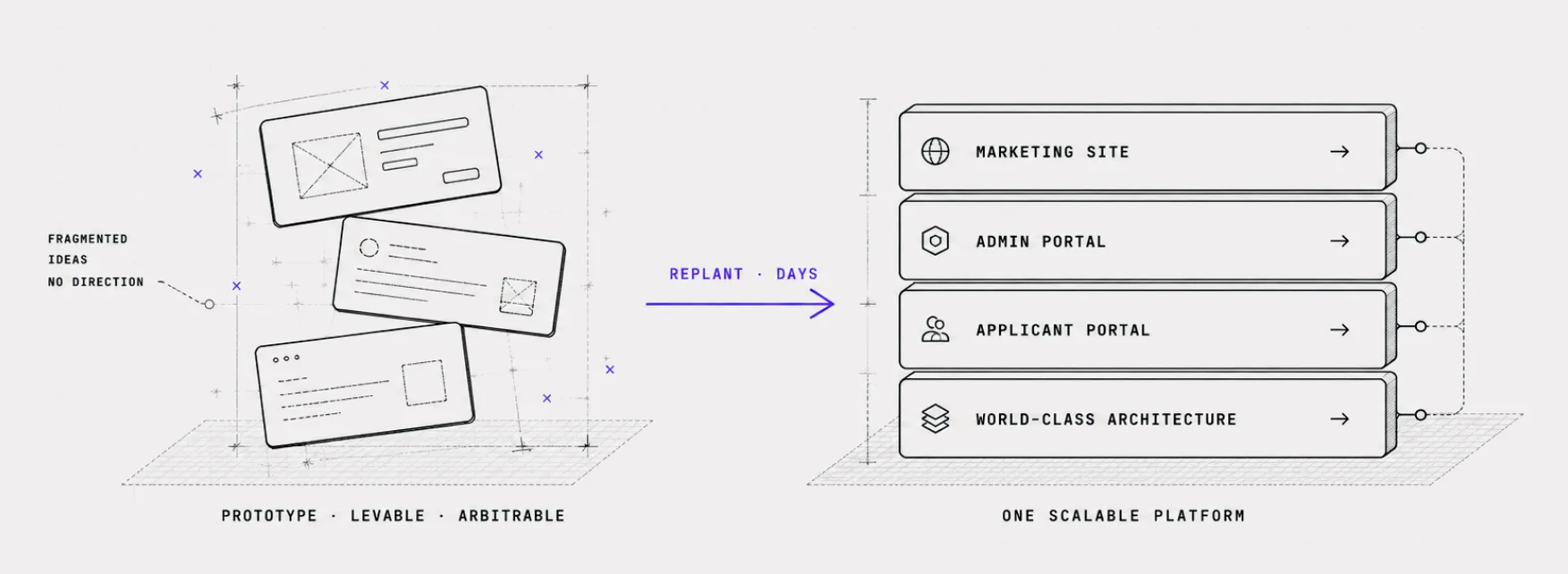
The rebuilt platform is now in the market, and the functionality Roost can deliver is far better than what the prototype allowed. The bigger change is in how the company operates. When they spot a business opportunity, they no longer have to spend weeks justifying the return before they can act.
“Before, a new experiment for a government agency was going to take a month. Now it's: one week, we can build some crazy stuff.”
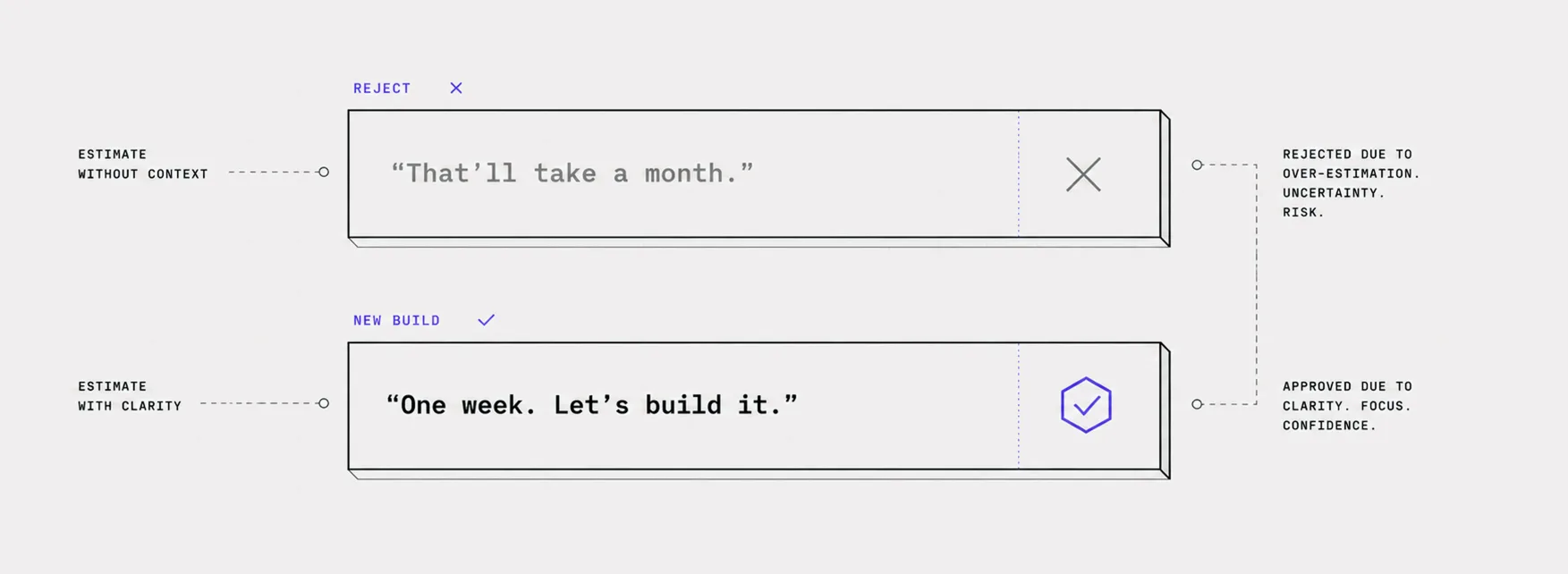
Directionally, the effects compound: new customers coming in, a faster sales cycle, and a greater ability to raise the funds to keep building, while needing less cash because the team builds so much more, so much faster.
Roost is a specific story, but the shape is everywhere right now: a real product, validated enough to raise on, built on tools that got it to 80% and then stopped. The rebuild that would take it to production used to be a venture-scale decision.
It no longer has to be. With the right people driving AI, the rebuild is days of work, and everything after it (the experiments, the sales cycle, the next raise) moves at the new speed.